

Neurodiversity Affirming, Inclusive, EMDR Therapy for Anxiety, PTSD, & More…
You can handle chaos.
It’s the stillness that hits you like a punch.
EMDR Therapy Intensives
Insight is great. Relief is better.
Most of my clients don’t come in to therapy because they were “too much” or “not enough”. They come to therapy because they learned to be just enough for everyone around them and lost themselves in the process.
Most of my clients come in saying things like:
“I can’t turn my brain off.”
“I’m always bracing for something bad.”
“I excel at work, but my relationships feel distant.”
“I’m highly competent but never feel connected.”
“People say I’m not doing enough, but I’m maxed out and no one sees it.”
And the stuff almost no one says out loud?
“I’m terrified I’ll become my abuser.”
“I’m scared I’ll never be good enough.”
“What if no one ever really loves me and I end up alone?”
Not to mention the things we do to manage, but really, they make it worse.
Scrolling at 2am to avoid
Food Noise
Control
Substance Use
Gambling
Infidelity
EMDR intensives target negative beliefs you have about yourself and the world and re-process them into more positive beliefs. When the beliefs driving the pattern begin to change, people often notice changes that no amount of willpower could create.
There is no “fake it till you make it” necessary. It’s not about positive affirmations finally sinking in, it’s about letting your brain reprocess the experiences that created your negative beliefs in the first place.
The most important question I ask my clients in their first session - what are you willing to lose?
Anything in your life currently built on you believing something negative about yourself will more easily shift because it has to integrate the new belief.

If that resonates, you’re not weak — and you’re not broken. Your nervous system learned to stay on guard for a reason. There’s a difference. And science actually has answers.
Things EMDR Therapy has helped my clients with…
Phobias
Accidents
Negative Beliefs
Feelings of Not Being Good Enough
Painful Childhood Experiences
Sexual Trauma
Emotional Abuse / Neglect
Intimate Partner Violence
Shame
Addictions
Divorce
Medical Illness / Trauma
Grief
Anxiety
Depression
Constant Feeling of Being On Edge
Recent Traumatic Events (to prevent PTSD from Developing)
Upsetting Thoughts / Images
Experiences of a Neurodivergent Mind in a Neurotypical World
Betrayal Trauma (both sides)
Physical Abuse
Religious Trauma
Immigration / First Generation Challenges of Bridging Two Worlds
Identity Challenges
Behavioral Addictions besides Substance Use that DeTUR can help with:
Shopping / Spending
Infidelity
Over-Eating / Food Noise
Gambling
Desire to be Productive / Challenges Relaxing
Seeking Control
Scrolling at 2am instead of sleeping to avoid
& more
What Do We Do About It?
Therapy that actually updates the system
Most therapy helps you understand your patterns.
This work helps you change them.
I use Eye Movement Desensitization and Reprocessing (EMDR) to target the negative beliefs
created by your past experiences so you stops reacting like the past is still happening.
No talking in circles trying to understand why something happened.
More actual shifts because when beliefs change, behavior follows.
Focused & Intentional
Therapy that updates your nervous system,
not just talks about it.
If you’re skeptical, good.
You should be.
Talking about your problems isn’t the same as changing them.
A lot of therapy does feel like:
repeating the same story over and over
collecting coping skills you forget to use
understanding everything… and still feeling the same
This is different.
We’re not here to overthink your overthinking.
We’re here to change the pattern that’s driving it.
This is probably for you if…
You’re high-functioning but constantly on edge
You can perform at work but struggle to feel present in your life
You understand your patterns… but can’t break them
You feel like you’re always waiting for something to go wrong
And the part you don’t usually say out loud:
“What if I never actually feel okay?”
“What if I end up alone?”
“What if something is just… wrong with me?”
There isn’t.
Your system just learned to survive — and it never got the update.
What we actually do here…
I focus on how your brain and nervous system are currently operating — not just where it came from.
Think of it like this:
Your brain is running old programming that made sense at the time.
But now it’s over-firing, over-protecting, and keeping you stuck.
Using EMDR (and tools like the Flash Technique and DeTUR Protocol when needed), we help your brain:
reprocess stuck experiences
reduce emotional reactivity
stop triggering the same loops
finally feel safe enough to relax
This isn’t about forcing change or “fake it till you make it”.
We don’t focus on the events or experiences.
We target the beliefs they created about who you are.
When the beliefs change behavior change becomes more natural.

What does that look like?
EMDR Extended and Intensive Sessions
What that means:
90 Minute Sessions (weekly or bi-weekly)
shortest recommended time for an EMDR session
3 hour Extended Sessions Monthly (every 3-5 weeks)
Most popular
Ideal for deeper work while still allowing treatment to evolve over time
structured, intentional, and private
designed for real movement — not maintenance
This is for people who don’t want to spend years talking about the same things.
About me
(so you know what you're walking into)
I’m not a blank-slate therapist. I’m direct and a little bit spicy.
I’m kind of a nerd about how the brain works, especially how patterns get wired and how they can change (shout out to Neuroplasticity).
I also:
wear hoodies to work
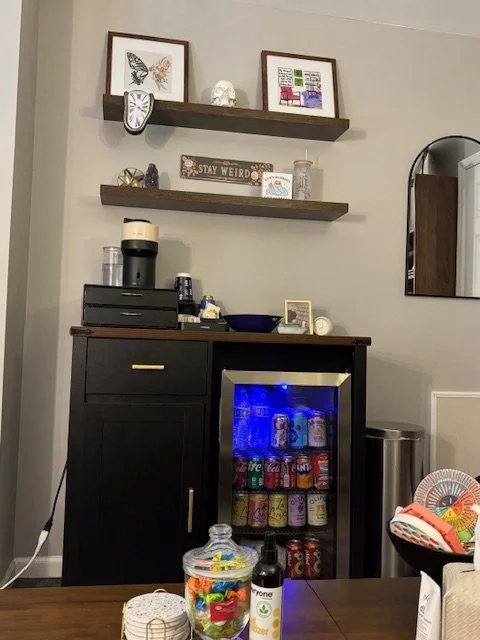
keep snacks, fridge, and coffee bar stocked because therapy is hard
will absolutely talk about my puppy if given the chance
and believe laughter belongs in the therapy room
I don’t have all the answers, and I’m not the right fit for everyone.
But I do know how to help people get unstuck in a way that actually works — because I’ve been on the other side of EMDR myself.
Let’s Keep It Simple..
If you’re tired of:
managing symptoms
over-analyzing everything
feeling like you “should be past this by now”
blaming yourself for everything that’s ever happened to you
This might be the thing that actually shifts it.
Next step
Book a free consult.
Ask your questions.
Be skeptical.
You don’t have to commit to anything — just see if it makes sense for you.
If you’ve made it this far, trust that something in you is ready for change.
You built an entire life while carrying things your nervous system was never meant to carry alone.
Tell me more…
Still have questions? Take a look at the FAQ or if you’re feeling ready, go ahead and fill out the contact form to schedule a free consultation.
-
I work with a culturally diverse population of clients aged 18+ from all different walks of life in the state of NJ.
Themes I see in my clients:
You’re successful on paper but exhausted internally
You’ve been told you’re ‘strong’ your whole life
You can perform, but you can’t relax
You understand your patterns… but can’t break them
Maybe you’ve even reached the point where you say “I know I have a good life, but I can’t enjoy any of it”
The common thread is not being able to enjoy the life that you’ve worked so hard to build because you’re still trapped in the negative belief system from the life you were forced to survive.
These negative beliefs often create feelings of deep shame for who we are and and an unrelenting feeling of not being good enough or deserving of good things.
Negative beliefs can prevent us from fully experiencing life in so many ways including:
Being our authentic selves
Communicating emotions, wants, and needs effectively
Allowing ourselves to go after our desires, and feel joy in the lives we’ve built
Succeeding in our career
Negative beliefs can show up as:
Intrusive and ruminating negative self-talk
Anxiety
Depression
Toxic relationship patterns
Anger issues
Negative body image
Low self-esteem
People pleasing or taking on the caretaker role in relationships
Poor boundaries (too rigid or too lax)
Inability to feel joy or positive emotions
Inability to relax or always feeling “on edge”
The desire to be “in control” of the situation at all times
Infidelity
Self-Sabotage
Substance use and other compulsive coping strategies (gambling, shopping, video games, sex, “workaholic”, avoidance & so on).
Some of the more common negative beliefs I work with are:
“I’m not good enough”
“I don’t deserve good things”
“I’m a burden”
“I’m unlovable”
“I’m a failure”
“I’m not capable”
“I’m alone”
“I’m defective / there’s something wrong with me”
“I should have done/known better”
“I’m too much or too difficult”
I’ve worked with individuals from all walks of life including:
Law Enforcement (local, state, and federal)
Military
Foster Care
Substance Use & Other Behavioral Addictions
First Generation & Immigrant Families
Stay at Home Parents
High-Level Executives
Entrepreneurs.
If you’ve made it this far, trust that something in you is ready for change.
You’ve survived things you never should have had to survive.
You built an entire life while carrying things your nervous system was never meant to carry alone.
You’re not here because you’re weak—you’re here because your nervous system did what is was supposed to - survived.Now it’s time to update the system so you can finally feel like the person that built this life instead of feeling like an imposter about to be “found out”.
-
Tired of talking in circles and still feeling stuck in therapy?
Eye-Movement Desensitization and Reprocessing (EMDR)is a structured and evidenced based therapy that uses bilateral stimulation (eye movements, tappers, or auditory tones) to target negative or disturbing memories / beliefs and reprocess them using the brains natural abilities resulting in reduced emotional intensity and impact.
Think of it as a digestive aid for your nervous system. Sometimes we take in experiences that have heavy emotional charges & our nervous system can’t digest them alone.
EMDR serves as a digestive aid for your nervous system & provides the additional support to allow the negative experiences to be “digested” fully and the residual “waste” finally removed.
EMDR is a bottom-up treatment modality. This means that the focus is not on our intellectual understanding of the events, but on allowing our brain and body to reprocess the events the way they were intended in the first place and allows adaptive information to integrate into memory networks.
EMDR can be a good option for individuals that:
Don’t want to talk about what happened
Already overthought about it and have not gotten the desired relief
Spent years in traditional talk therapy processing trauma and are still experiencing symptoms
Have something they don’t want to say out loud, but desperately want relief from
EMDR can be done with significantly less talking and doesn’t require the therapist to have all the details of the trauma to be effective.
Just some of the potential benefits of EMDR:
Less anxiety and bracing
Less ruminating and intrusive thoughts
Less obsessive productivity
Less reactivity
Better stress management
Less overthinking
Better sleep
Improved self-confidence
Improved communication
Improved relationships
Decrease or eliminate nightmares and flashbacks
More ease at work and home without constant effort
Finally able to relax
Learn more about EMDR and specific protocols I use here.
-
We don’t over-analyze your childhood for 2 years
We don’t rely on willpower or “coping skills” alone
We target the nervous system patterns driving your behavior
EMDR helps your brain reprocess, not just rehash
We’re not sifting through the past forever. We’re fixing what’s stuck.
Extended and Intensive Sessions allow for deeper work and create more noticeable impact in a shorter period of time than traditional weekly talk therapy.